
🔥 The only Norwich, Norfolk fire protection company offering fire risk assessments, fire strategies & fire engineering design, cause & effect matrix plans, comprehensive fire safety audits, fire detection and alarm system installation and maintenance, fire door inspections, kitchen fire suppression, fire stopping, fire extinguishers and emergency lighting services — all under one roof.
Serving Norfolk · Norwich · Dereham · Kings Lynn · Great Yarmouth · Thetford · Wymondham · Swaffham
Fire Strategies & Fire Engineering Design
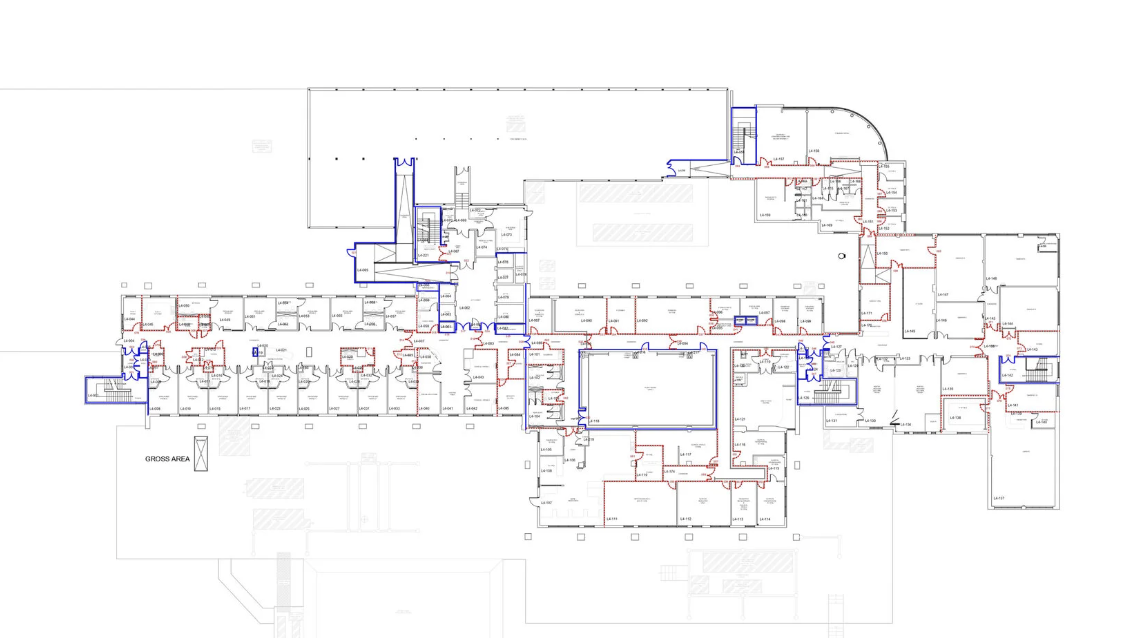
Comprehensive fire strategy development and performance-based fire engineering design for complex, large and non-standard buildings — produced in accordance with BS 7974 and the PD 7974 series.
Cause & Effect Matrix Plans for Fire Detection and Alarm Systems
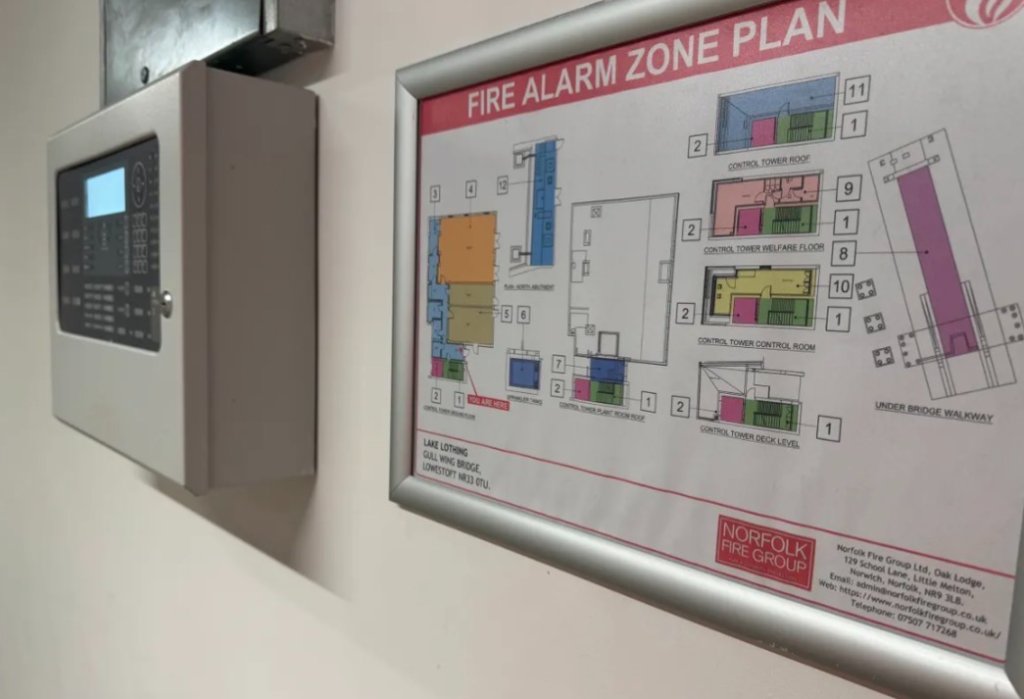
Cause and effect matrix plans and logic diagrams that define exactly how every input device on a fire alarm system drives every output action — produced in accordance with BS 5839-1:2025 and BS 7273-6:2022.
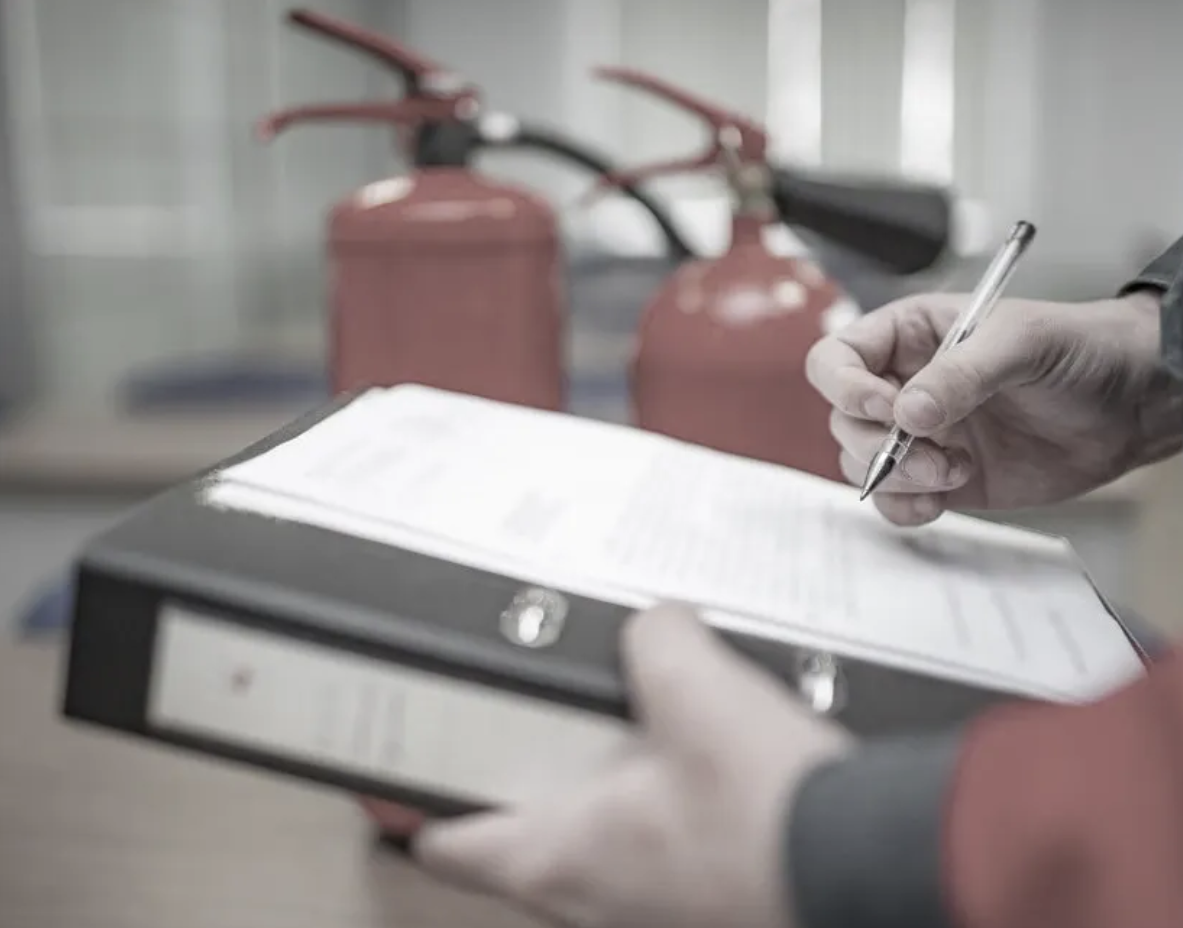
Comprehensive Fire Safety Audit
Top-to-bottom audit of all active and passive fire protection measures to ensure your premises meet current legislation and the latest British Standards.
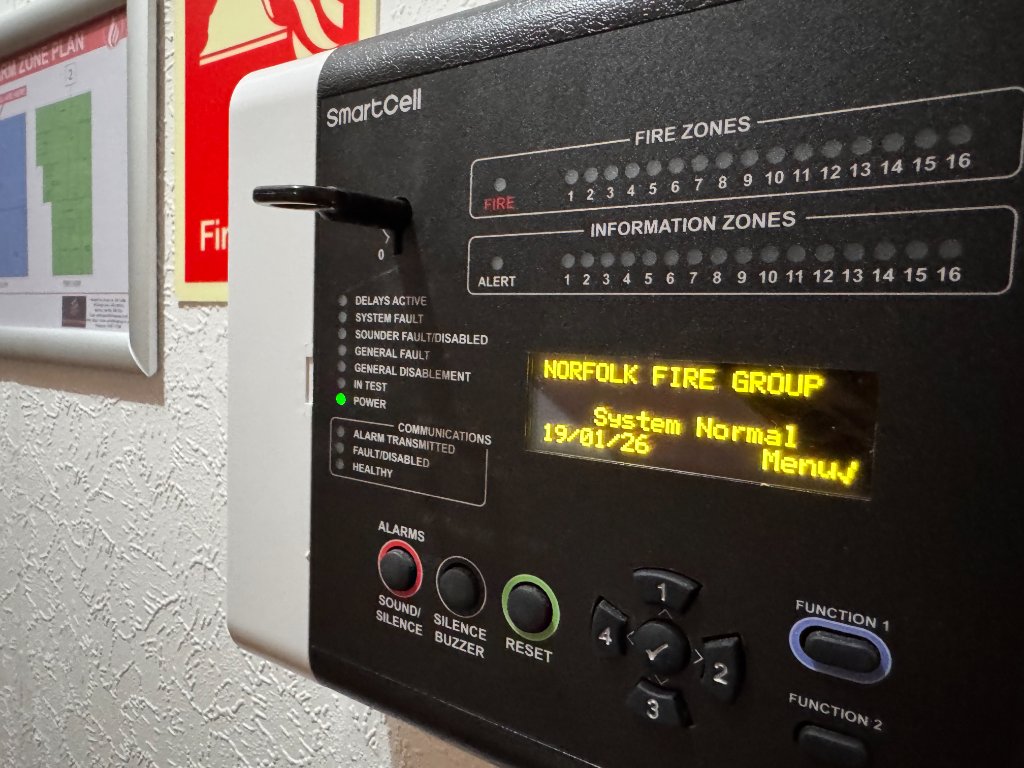
Fire Alarm Systems to BAFE SP203-1
Professional design, installation, commissioning, service and maintenance of fire detection and alarm systems for commercial and residential properties.
Fire Door Regulations Are Being
Strengthened Across the UK in 2026
New rules affect building owners, landlords, and duty holders. Here's what you need to know — in plain English.
Are you compliant?
Non-compliance with fire door regulations can result in enforcement notices, prosecution, unlimited fines, and — most critically — loss of life. Under the Regulatory Reform (Fire Safety) Order 2005 and the Building Safety Act 2022, the "responsible person" is legally liable. Don't leave it to chance.
Higher Standards for Fire Door Assemblies
All fire doors must now comply with updated British Standards including BS 8214:2016 and BS EN 1634. This means stricter requirements for door leaf, frame, seals, and ironmongery — all components must be tested and certified together as a complete assembly, not individually.
Mandatory Inspections for Residential Buildings
Under the Building Safety Act 2022, responsible persons for higher-risk residential buildings (over 18m or 7 storeys) must carry out regular fire door inspections — every 3 months for communal areas and annually for individual flat entrance doors. Failure to comply can result in significant fines.
Competency Requirements for Inspectors
Fire door inspections must now be carried out by a competent person. This means inspectors should hold a recognised qualification such as the UK Fire Door Training (UKFDT) Approved Inspector or BRE Group certification. Using unqualified contractors puts building owners at legal risk.
Intumescent Seals & Smoke Seals Are Non-Negotiable
All fire doors must be fitted with correctly specified intumescent strips and cold smoke seals. Gaps between the door and frame must not exceed 3mm on sides and top, and 8mm at the bottom. Even small gaps can allow deadly smoke to pass through in minutes.
Self-Closing Devices Must Be Functional
Every fire door must be fitted with a working self-closer that brings the door fully to the latch from any open position. Doors held open with wedges or where closers have been removed are a serious safety and compliance failure — and a common cause of enforcement action.
Record-Keeping & Documentation
Duty holders must now maintain detailed records of all fire door inspections, repairs, and replacements. This forms part of the "golden thread" of building safety information required under the Building Safety Act 2022, and must be available to residents and regulators on request.